次元交錯:AI與時尚的流動
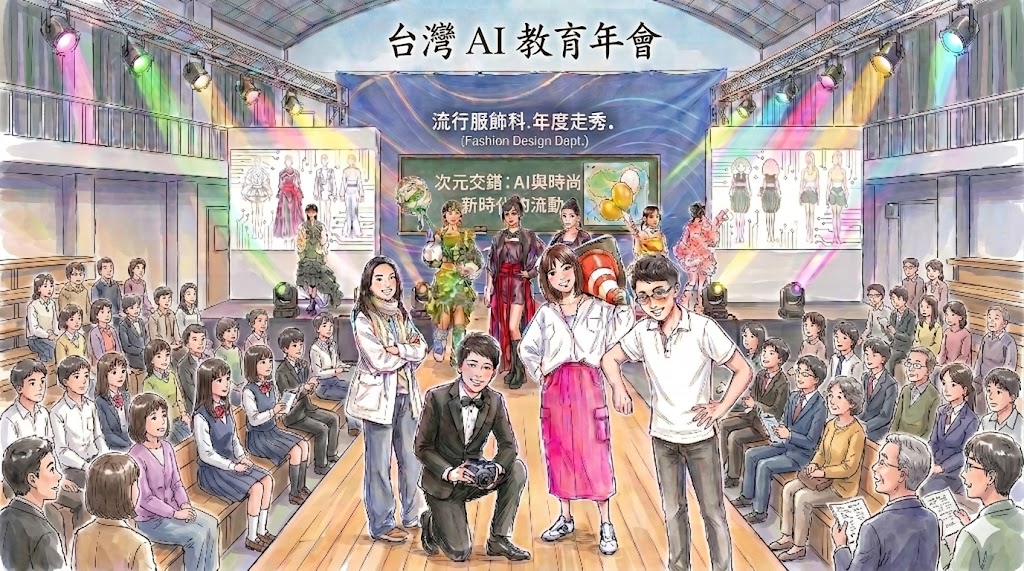
講者/Speaker: 何佳怡、陳常薇、湯凱任、王靖翔, JIA YI HE、Chen Chang Wei、TANG KAI-JEN、WANG JING XIANG
本教學應用設計旨在解決流行服飾科學生在籌備畢業製作時面臨的四大核心困境:創意表達受限 、實體服裝展示形式單一 、數位化製作(如3D建模與動畫模擬)技術門檻高 ,以及製作時間與資源受限等問題 。為此,本計畫創新導入「AI靈感生成>設計優化>實體製作>動畫生成>影片輸出>畢展呈現」的整合性人機協作流程 。
在實務教學操作中,學生於初期透過 A.art(或 Midjourney)快速產出多元設計草圖與風格提案,並結合「服裝設計角色 IP 化」概念 ;隨後運用 Recraft 將圖像優化為線稿與版型,建立數位設計與傳統打版製作間的轉譯能力 ;在實體服裝縫製完成後,導入 DeeVid AI 生成超越現實、多風格變換的虛擬模特動態走秀動畫 ;最後利用 FlexClip 剪輯整合高品質成果影片 ,並於畢業展覽中打造結合「實體走秀」與「數位動畫」的雙軌沉浸式展演 。
質化成效顯示,此教學模式不僅有效降低學生的學習負擔與技術門檻 ,改善「想得到卻畫不出來」的落差 ,更能打破審美慣性、激發學生的創意思維與自主優化問題的能力 。透過系統性的 AI 技術引導,學生成功從傳統的技能學習者蛻變為具備跨域整合能力的時尚創作者 ,達成了兼具數位力與未來職能競爭力的卓越學習成效 。
This instructional design aims to address the four core challenges faced by fashion design students during their graduation projects: restricted creative expression , monotone formats of physical runway displays , high technical barriers to traditional digitization methods (such as 3D modeling and animation simulation) , and constraints on production time and resources. To overcome these hurdles, this project innovatively implements an integrated human-AI collaborative pipeline: "AI Inspiration Generation -> rightarrow -> Design Optimization -> Physical Production-> Animation Generation-> Video Output -> Graduation Exhibition Display."
In teaching practice, students utilize A.art (or Midjourney) during the initial stage to rapidly generate diverse design sketches and style proposals, incorporating the concept of transforming "fashion design into character IP." Subsequently, Recraft is applied to optimize these images into line arts and patterns, establishing a critical translational ability between digital concepts and traditional garment construction. After the physical garments are fabricated, DeeVid AI is introduced to produce surreal, multi-styled virtual model runway animations that transcend physical restrictions. Finally, FlexClip is used to edit and synthesize high-quality showcase videos , culminating in a "dual-track immersive exhibition" that pairs physical fashion shows with digital animation displays.
Qualitative results demonstrate that this pedagogical model significantly lowers technical thresholds and cognitive burdens , bridging the gap where students "could imagine but not sketch." Furthermore, it breaks conventional aesthetic boundaries, stimulating creative thinking and fostering students' proactive problem-solving skills through iterative refinement. Through the systematic integration of AI tools, students successfully transition from traditional technical learners into cross-disciplinary fashion innovators , achieving exceptional learning outcomes with strong digital competency and future career readiness.
Keywords: Generative AI, Fashion Design Education, Human-AI Collaboration, Immersive Exhibition, Digital Transformation
- 論文全文:次元交錯:AI與時尚的流動
- 影像: 相關影片